
The Bahá’í Faith was founded in Iran by Husain Ali Nuri, known as Bahá’u’lláh, who was born on November 12, 1817, in Tehran. He is recognized as the prophet of the Bahá’í Religion. His intimate proclamation occurred in 1853 at the “Black Pit” (Siyahchal) of Tehran when he was 36 years old. His open proclamation took place in Baghdad at the Najib Pasha garden, later named Ridvan Garden, on April 21, 1863. Bahá’u’lláh proclaimed his mission to the world by sending tablets from Adrianople to various rulers, kings, emperors, presidents, and religious leaders between 1867 and 1873. His prophethood lasted 39 years, during which he was exiled from Tehran to Baghdad (11 years), Constantinople (4 months), Adrianople (5 years), and finally to the prison city of Acre in Palestine (25 years). He authored over a hundred volumes, including notable works such as Kitab-i-Aqdas (The Most Holy Book), The Hidden Words, Epistle to the Son of the Wolf, Kitab-i-Iqan (The Book of Certitude), The Seven Valleys, The Four Valleys, and many prayers and tablets addressed to various believers.
According to Bahá’u’lláh’s written Will and Testament, the Kitab-i-Ahd, his son Abbas Effendi, known as Abdu’l-Bahá, born on May 23, 1844, in Tehran, was his successor. Abdu’l-Bahá’s roles in the Bahá’í Faith included being the Interpreter of the Word of God, the Centre of the Covenant, and the leader and guide of the Bahá’ís worldwide after Bahá’u’lláh’s passing. He also served as the Exemplar of the Bahá’í Faith. Abdu’l-Bahá assumed this position in 1892 at the age of 48. From early childhood, at the age of 9, he experienced exile and imprisonment, gaining freedom in 1908 at the age of 64. After his release, he traveled through Europe and the United States from 1910 to 1913 to spread the Faith and share his father’s teachings. Abdu’l-Bahá authored numerous books, tablets, and prayers on various aspects of personal and social life, which continue to be referenced by Bahá’ís. He passed away on November 28, 1921, at the age of 77, marking the end of the Heroic Age and the Covenant Epoch.
In accordance with Abdu’l-Bahá’s Will and Testament, Shoghi Rabbani, known as Shoghi Effendi, was appointed as his successor. Born on March 1, 1897, in Acre (Akka), Shoghi Effendi was 24 years old and studying in England when he learned of his grandfather’s passing. Abdu’l-Bahá’s Will and Testament designated Shoghi Effendi as the Guardian of the Cause of God and the Interpreter of the Word of God. The Will also addressed the continuity of Guardianship in the Bahá’í Faith. Despite his young age, Shoghi Effendi effectively managed his responsibilities, establishing the administrative order according to the teachings of Bahá’u’lláh and Abdu’l-Bahá. He oversaw the construction of the shrines of the Báb, Bahá’u’lláh, and Abdu’l-Bahá, as well as the Bahá’í Archives and the surrounding gardens in Haifa and Akka. Shoghi Effendi authored numerous books and tablets in Persian and English. His significant contribution to the Western world included translating the works of Bahá’u’lláh and Abdu’l-Bahá into English with exceptional skill. Shoghi Effendi passed away on November 4, 1957, in London at the age of 60, having served as the first Guardian of the Bahá’í Faith for approximately 36 years.
During his lifetime, Shoghi Effendi appointed his successor, Charles Mason Remey, an American Bahá’í, following the direction of Abdu’l-Bahá’s Will and Testament, which stated: “…It is incumbent upon the guardian of the Cause of God to appoint in his own lifetime him (next guardian) that shall become his successor, that differences may not arise after his passing.”
Charles Mason Remey was born on May 15, 1874, in America. He declared himself a Bahá’í at the age of 26 on December 31, 1899, through May Ellis Bowles (later Mrs. May Sutherland Maxwell, the mother of Ruhiyyih Khanum). Mason Remey became close to members of the Holy Family, including Bahá’u’lláh’s eldest son and successor, Abdu’l-Bahá, Bahá’u’lláh’s daughter, Bahiyyih Khanum, and his great-grandson, Shoghi Effendi. Abdu’l-Bahá sent a significant tablet to Mason Remey on May 3, 1906, foretelling his future role as the second Guardian of the Faith:
“Verily I beseech God to make thee under all circumstances. Do not become despondent neither be thou sad. Ere long, thy Lord shall make thee a sign of guidance among mankind.”
Mason Remey received many other tablets from Abdu’l-Bahá, who addressed him as “O my dear son.”
Mason Remey traveled extensively, including a visit to India in 1910, where he visited cities such as Calcutta, Baroda, Banaras, Agra, Delhi, Mount Abu, and Bombay. In 1950, Shoghi Effendi invited Mason Remey to Haifa, the World Administrative Centre of the Faith, to make it his home. On January 9, 1951, Shoghi Effendi proclaimed the establishment of the first International Bahá’í Council (the embryonic Universal House of Justice), appointing Mason Remey as its head. This appointment had significant implications, although the Council remained inactive during the remaining years of Shoghi Effendi’s ministry. Mason Remey proclaimed his guardianship in Ridvan 1960, addressing the Annual National Convention of the USA. As the president of the embryonic Universal House of Justice, he became the second Guardian of the Bahá’í Faith.
In 1965, Joel Bray Marangella became the third Guardian of the Faith, appointed by Mason Remey through a hand-written letter and his appointment as the President of the Second International Bahá’í Council. Joel Bray Marangella was born on September 22, 1918, in Lynn, Massachusetts. His parents, Phillip Amalfi Marangella and Edith Brooks Guthrie Marangella, enrolled as Bahá’ís when Joel was a baby. He lived in various major cities in the United States, participating in both spiritual and administrative Bahá’í activities. Joel married Irene, also a Bahá’í, in 1945. In 1950, they responded to Shoghi Effendi’s call for pioneers to spread the Faith in Europe, spending 18 years in France. In 1954, Joel was appointed as an Auxiliary Board Member for the propagation of the Faith by the Hands of the Cause. He played a key role in forming the first National Spiritual Assembly of France in May 1958, serving as its first President and continuing in leadership roles in subsequent elections.
After leaving France in 1968, Joel lived successively in Germany, Switzerland, and Australia before returning to the United States in March 2010. Joel Bray Marangella is recognized by Orthodox Bahá’ís as the third Guardian of the Bahá’í Faith, the authorized interpreter of the Bahá’í Writings, and the president and sacred head for life of the Universal House of Justice (provisionally named, in its embryonic form, as the International Bahá’í Council of the Orthodox Bahá’ís).
Inauguration of Orthodox Bahá’í Faith in India
Joel Bray Marangella marked the inauguration of the Orthodox Bahá’í Faith in India on May 29, 1991, by appealing in the Times of India with the title: “An Appeal to the Heterodox Bahá’ís.” He followed this with a more comprehensive advertisement on March 7, 1992, and a third advertisement on May 16 and 17, 1992. These efforts led to the historic formation of the Mother Bahá’í Council of India in Delhi, with Mr. Vinod Kumar as its secretary. Subsequently, two more local councils were formed in Bhagalpur district and Thane, with many localities and individual believers declaring their loyalty to the Living Guardian of the Faith, Joel B. Marangella.
Encouraged by the response from Indian Bahá’ís, the third Guardian placed a fourth advertisement in the Times of India on May 29, 1992, calling upon Indian Bahá’ís to uphold the Covenant of Bahá’u’lláh by turning to the Guardian and severing ties with the sans-Guardian organization. This advertisement welcomed Indian Bahá’ís into the true Administrative Order, founded upon the sacred provisions of the Will and Testament of Abdu’l-Bahá. These efforts helped Bahá’í believers throughout India realize the integral role of the Guardianship in the Faith.
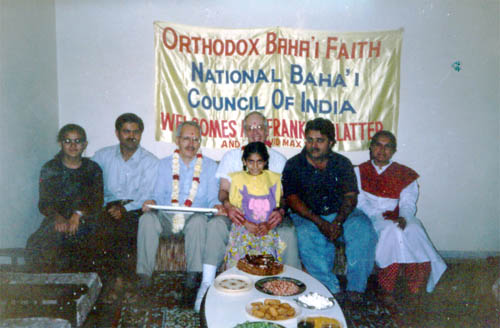
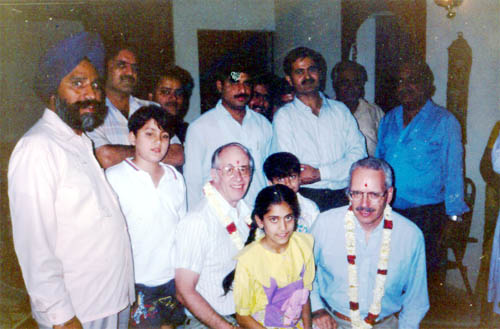
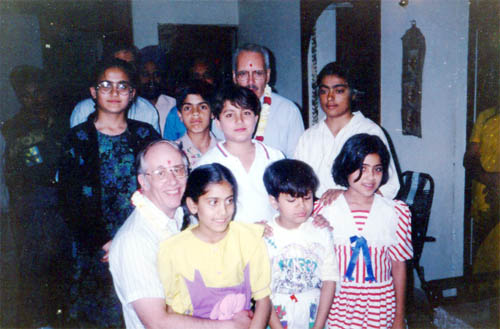
Overwhelmed by the success and eagerness of Indian believers, Joel Bray Marangella sent two American believers, Mr. Frank Schlatter and David Maxwell, to assess the situation in India and teach and deepen the Orthodox Bahá’ís. Their visits to Delhi, Agra, Mumbai, Aurangabad, Baroda, and Rajgir enhanced teaching activities and firmly established the Orthodox Bahá’í

 The Orthodox Bahá’í Faith